


























What are the Tax Benefits of Leasing a Van in 2026?
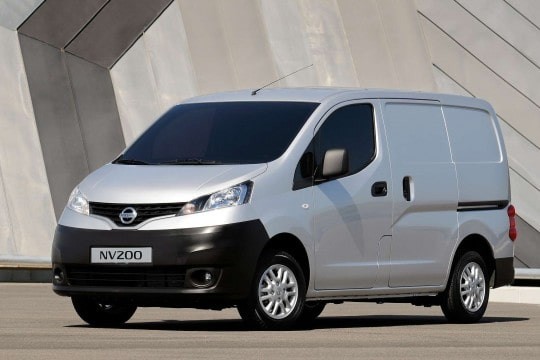
If you’re a sole trader, small business owner, or fleet manager weighing up whether to lease or buy, the tax picture is one of the most important factors in that decision. The good news is that leasing a van for business comes with some significant tax advantages that outright ownership simply doesn’t offer in the same way.
Here’s everything you need to know about the tax benefits of van leasing in the UK in 2026.
1. Lease Payments Are Fully Tax Deductible
When your business leases a van on a contract hire agreement, HMRC treats the monthly payments in the same way as any other business rental expense. This means the full cost of your lease payments can be offset against your taxable profits, reducing your corporation tax or income tax bill accordingly.
For a limited company paying corporation tax at 25%, every £1,000 of van lease payments effectively costs £750 in real terms after tax relief. For sole traders on the higher rate of income tax, the saving is broadly similar.
This is one of the most straightforward tax advantages of leasing over buying. If you purchased a van outright, you’d claim capital allowances instead - a more complex process that spreads the relief over time.
2. You Can Reclaim Up to 100% of the VAT
For VAT registered businesses, van leasing offers a significant advantage over leasing a car. HMRC classifies most vans - including panel vans, Luton vans, and chassis cabs - as commercial vehicles rather than cars, which means different VAT rules apply.
On a car lease, HMRC blocks 50% of the VAT by default, assuming some private use. On a van lease, you can reclaim up to 100% of the VAT on your monthly payments, provided the van is used for business purposes.
You can also reclaim 100% of the VAT on any maintenance or service package added to your lease, as long as it is itemised separately on your invoice.
This is a meaningful difference in real terms. On a £400 per month van lease plus £80 VAT, a VAT-registered business could reclaim the full £80 per month - saving £960 per year compared to a car lease where only half could be recovered.
Note: If a van is used for both business and private purposes, VAT recovery must be apportioned accordingly. Always keep accurate mileage logs to support your claim.
3. Company Van Benefit in Kind (BIK) Tax - What You Need to Know
If your business provides a van to an employee who uses it for private journeys as well as work, that employee may be liable to pay Benefit in Kind (BIK) tax.
Unlike company car BIK - which is calculated as a percentage of the vehicle’s list price based on CO2 emissions - van BIK is charged at a flat rate, making it simpler to calculate and generally much cheaper.
In 2026, the van BIK flat rate is £4,170.
If your employer also pays for fuel used on private journeys, an additional van fuel benefit charge of £798 applies in 2026, adding a further £159.60 per year for basic rate taxpayers.
4. When Van BIK Tax Doesn’t Apply
Van BIK is not inevitable - there are several situations where it doesn’t arise at all:
Business only use. If the van is used exclusively for business journeys, no BIK tax is due. HMRC defines a business journey as one made in the performance of duties, or a journey to a temporary workplace.
Insignificant private use. HMRC allows some leeway for very occasional private use - for example, stopping at a shop on the way home from a job. If private use is genuinely insignificant, the BIK charge does not apply.
Pool vans. If a van is shared between two or more employees, is not kept overnight at any employee’s home, and private use is only incidental to business use, it qualifies as a pool van and is fully exempt from BIK tax.
Zero-emission electric vans. Fully electric vans attract 0% BIK in 2026, meaning there is no benefit in kind tax to pay regardless of private use. This makes electric van leasing an exceptionally tax efficient option for businesses.
5. No Depreciation to Worry About
When you lease a van rather than buy one outright, depreciation is not your problem. The leasing company carries all the residual value risk. At the end of your contract, you simply hand the van back and move on to a new model - with no concerns about part exchange values or a balance sheet hit.
This also means your business isn’t tying up capital in a depreciating asset, keeping your balance sheet cleaner and your cash flow more flexible.
6. Double Cab Pickups: An Important 2026 Rule Change
If your business operates double cab pickup trucks such as the Ford Ranger, Toyota Hilux, or Isuzu D-Max, be aware that HMRC changed the rules in 2025.
These vehicles were previously treated as vans for BiK purposes. They are now treated as company cars for BIK tax, meaning the charge is calculated based on CO2 emissions and list price - which is typically significantly higher than the van flat rate.
If you operate or are considering double cab pickups as company vehicles, this is worth factoring in carefully before signing any agreement.
Is Van Leasing Right for Your Business?
For the majority of UK businesses, the combination of fully deductible payments, 100% VAT recovery, and a predictable flat rate BIK charge makes van leasing one of the most tax efficient ways to put commercial vehicles on the road. Add in the operational simplicity of not owning a depreciating asset, and the case is strong.
If you’re considering an electric van, the 0% BIK rate makes the decision even clearer from a tax perspective.
To explore our van leasing deals or get advice tailored to your business, contact us or call our team on 0330 056 3331.
This article is intended as general guidance only. Tax rules can be complex and individual circumstances vary - always consult a qualified accountant or tax adviser for advice specific to your business.