


























Will Hybrid Car Leasing Options Reduce Company Car Driver's Benefit in Kind Tax in 2026?
Company car Benefit in Kind (BiK) rates have continued to increase for petrol and diesel cars in recent years - however, the same cannot be said for hybrid and electric vehicles, which remain significantly more tax efficient options for drivers and fleet operators alike.
The low rates available on some hybrid cars can result in significant variations between similar vehicles, as we have discussed previously in our A Tale of Two SUVs piece. Understanding the current landscape is essential for any company car driver or fleet manager looking to make an informed decision heading into the new tax year.
To understand whether company car rates will continue to favour greener alternatives, it is important to understand the available options:
Electric Vehicle Leasing
2025 was a landmark year for electric vehicles in the UK. According to the Society of Motor Manufacturers and Traders (SMMT), almost half a million battery electric vehicles (BEVs) - 473,348 units - were registered during 2025, representing a 23.4% market share. This places the UK as one of the largest EV markets in Europe by volume.
Despite this strong growth, the EV market still faces familiar headwinds:
1. Vehicle acquisition costs remain higher than combustion alternatives, though the gap is narrowing
2. Electric driving range has improved considerably, but concerns remain for high mileage drivers
3. Public charging infrastructure continues to expand, though affordability and reliability remain issues
4. Some models still carry long lead times, though manufacturer investment has increased choice to over 160 BEV models in the UK
The good news for 2026 is that electric cars remain the most tax efficient company car option, attracting a BiK rate of just 3% in 2025/26, rising to 4% in 2026/27 and 5% in 2027/28. With confirmed rates through to 2028, fleet managers have genuine planning certainty for the first time in years.
Note: From April 2028, the UK Government will introduce a mileage based charge on electric and plug-in hybrid cars. Fully electric cars will attract approximately 3p per mile, while plug-in hybrids will be charged around 1.5p per mile. For typical annual mileage of 10,000 miles, this adds roughly £300 per year on top of BiK tax - a factor worth including in long-term fleet planning.
Hybrid Vehicle Leasing
Hybrid vehicles continue to offer a compelling middle ground, allowing drivers to take advantage of electric driving for shorter journeys - and the associated BiK savings - without the range anxiety associated with full EVs. In 2025, hybrid electric vehicles (HEVs) achieved a 13.9% market share, with plug-in hybrids (PHEVs) growing fastest of all powertrains, rising 34.7% year-on-year to 11.1% of registrations, according to SMMT.
For more detail on the differences between vehicle types, take a look at our Electric & Hybrid Vehicle Leasing Guide.
A Plug-In Hybrid Vehicle (PHEV) is powered by either a battery or a conventional internal combustion engine (ICE). Battery only range has improved markedly and now typically sits between 20–70 miles for most current models, with some premium PHEVs achieving over 60 miles of zero emission driving. The driver can switch freely between electric and combustion power as their journey demands.
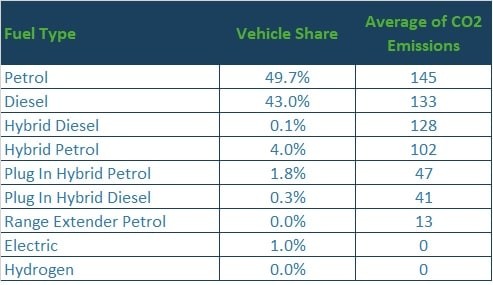
Because PHEVs can be driven in electric only mode, they typically carry lower official CO2 figures than their combustion equivalents, translating directly into lower BiK rates for drivers and reduced Class 1A National Insurance liability for employers.
An important note for 2026: From April 2026, the UK adopts the Euro 6e-bis emissions standard. PHEVs are being retested under a more representative cycle that better reflects real-world driving, covering a longer distance than before. For some models, this will push official CO2 figures upward, potentially moving them into a higher BiK band. Drivers should check the latest WLTP-tested CO2 figure for their chosen vehicle before ordering, as emissions free range remains the key determinant for sub-50g/km PHEVs.
Company Car Tax Impact
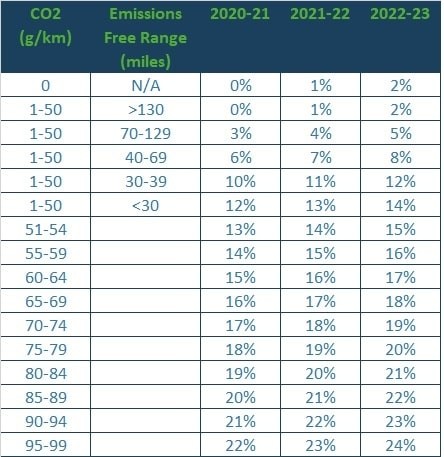
From April 2025, hybrid vehicles with under 50g CO2 emissions attract a BiK rate of 5%–14% depending on their all-electric range. This compares very favourably with the standard petrol vehicle rate - which for a car emitting over 155g CO2 reaches 37% - and a diesel surcharge of 4% for vehicles that are not RDE2 compliant.
The table below outlines current PHEV BiK bands (2025/26) for sub 50g CO2 vehicles based on electric only range:
130+ miles electric range: 5% BiK
70–129 miles electric range: 8% BiK
40–69 miles electric range: 12% BiK
Under 40 miles electric range: 14% BiK
These rates are set to increase by 1 percentage point per year through to 2027/28 - but even so, PHEVs will remain significantly cheaper to run as a company car than an equivalent petrol or diesel model for the foreseeable future. By comparison, petrol/diesel vehicles with emissions above 155g/km face the maximum 37% BiK rate.
BMW X5 Example
How does this play out in practice for a typical executive SUV choice? Here is an updated comparison for the 2025/26 tax year using the BMW X5 range:
BMW X5 xDrive30d M Sport – Diesel - P11D value approximately £72,000. With CO2 of around 181g/km, this sits in the 35% BiK band. For a 40% taxpayer, that equates to approximately £840 BiK tax per month.
BMW X5 xDrive50e M Sport – Plug-In Hybrid - P11D value approximately £83,310. With CO2 of 21g/km and an electric only range of around 63 miles, this sits in the 8% BiK band for 2025/26. For a 40% taxpayer, that equates to approximately £222 BiK tax per month.
A saving of over £600 a month in Benefit in Kind tax versus the diesel variant!
Key point: For PHEVs with CO2 under 50g/km, the emissions free range (electric only range) determines the specific BiK band. Always verify the official WLTP-tested electric range for your chosen vehicle before placing an order, particularly in 2026 where Euro 6e-bis retesting may affect some models' published figures.
Hybrid Car Leasing Options
There are now well over 300 hybrid and plug-in hybrid vehicle options available to lease - a number that continues to rise week on week as manufacturers bring new electrified models to market. Below, we summarise the key options across each vehicle category.
City Car
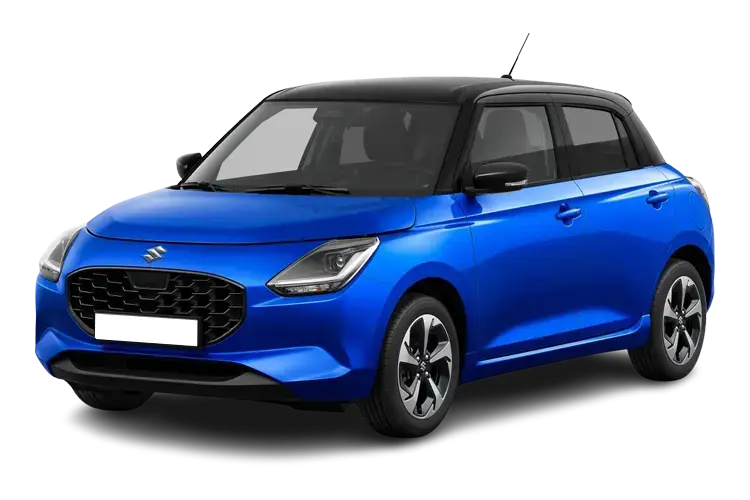
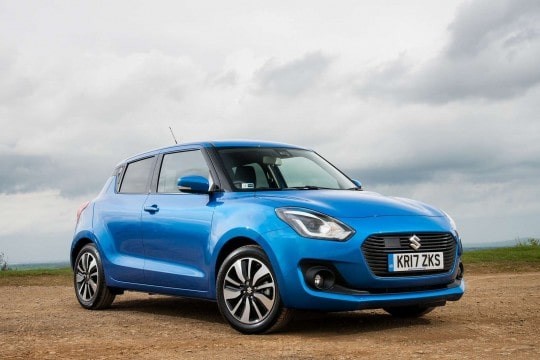
Even at the smallest end of the market, hybrid technology is now well established. The Toyota Aygo X and Suzuki Swift both offer mild hybrid versions, while the Honda Jazz continues to offer a full self charging hybrid drivetrain that is genuinely impressive for city use. Emissions rates from around 92g/km and P11D values from £16,000 mean BiK rates can be as low as £100–£130 per month for a 40% taxpayer - comparing favourably to the petrol/diesel average of around £190 per month for this segment.
Small Car
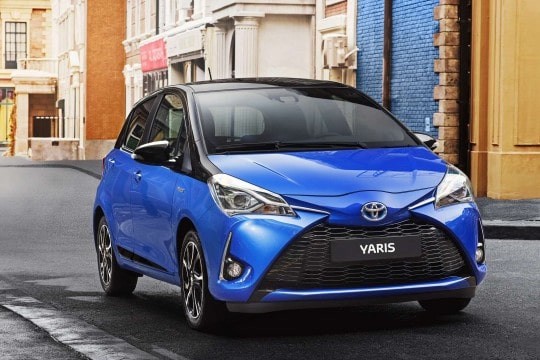
The Toyota Yaris remains the standout option in this segment with CO2 rates from 13g/km and P11D values from around £20,000. Benefit in Kind for a 40% taxpayer starts from approximately £100 per month - a substantial saving against the petrol/diesel segment average of approximately £240 per month. The Yaris now features Toyota's fifth generation hybrid system, offering improved efficiency and a more refined drive than earlier iterations.
Medium Car
As vehicle size increases, so does the breadth of choice - with both volume and premium manufacturers now offering compelling hybrid options in this segment.
Volume manufacturer options include the Toyota Corolla and Hyundai Ioniq 6. The Corolla in particular continues to impress, with P11D values from around £28,000 and CO2 from 26g/km. BiK starts from approximately £150 per month for a 40% taxpayer -over £100 less than the petrol/diesel equivalent average for this segment.
Premium segment options include the Audi A3 Sportback TFSI e, BMW 2 Series Active Tourer PHEV and Volkswagen Golf eHybrid. P11D values start from approximately £35,000 with CO2 from around 26g/km and electric only ranges now reaching up to 70 miles on some variants. BiK for a 40% taxpayer starts from around £140 per month, compared to the premium medium combustion average of approximately £350 per month.
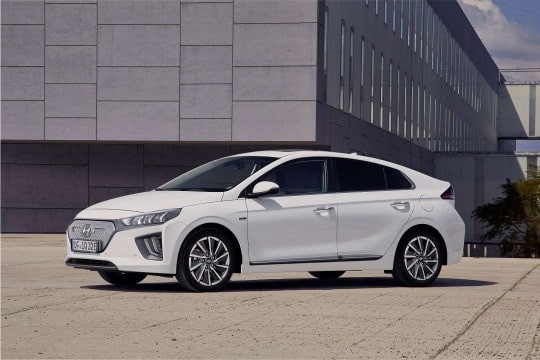
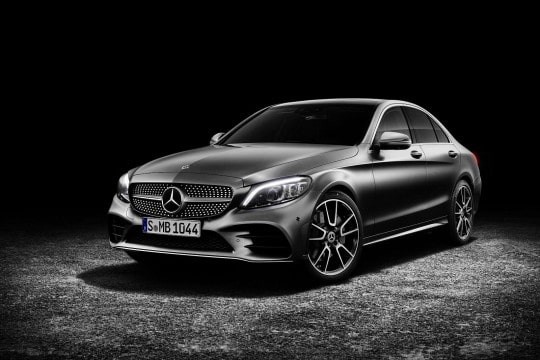
Large Car
This segment remains one of the most popular for company car drivers and fleet operators, so it is no surprise that the range of hybrid options is broad.
Volume manufacturer options include the Toyota Prius, Peugeot 508 PHEV and Skoda Superb iV. BiK rates start from approximately £140 per month for a 40% taxpayer, compared to diesel alternatives at around £340.
Premium options include the BMW 3 Series PHEV, Mercedes C-Class PHEV, Lexus IS, Volvo S60 Recharge and Volvo V60 Recharge. P11D values start from around £40,000 with CO2 from 28g/km and emissions free ranges up to 38 miles. A 40% taxpayer will pay BiK from approximately £160 per month - more than £300 less than the combustion engine premium average for this segment.
Executive Car
The executive car segment is dominated by premium manufacturers, with the BMW 5 Series PHEV, Lexus ES, Mercedes E-Class PHEV, Volvo S90 Recharge and Volvo V90 Recharge all offering plug-in hybrid powertrains.
A petrol or diesel option in this segment would cost a 40% taxpayer around £630 per month in BiK tax. Hybrid options start from approximately £175 per month, thanks to CO2 as low as 28g/km and electric only ranges exceeding 50 miles on some variants.
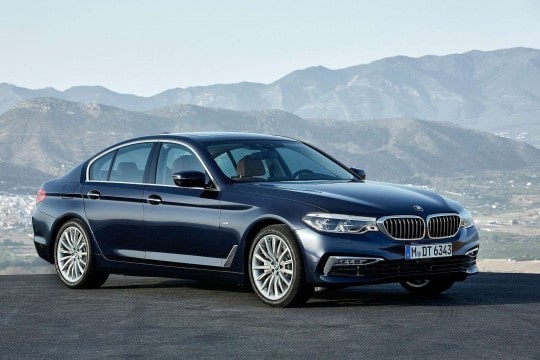
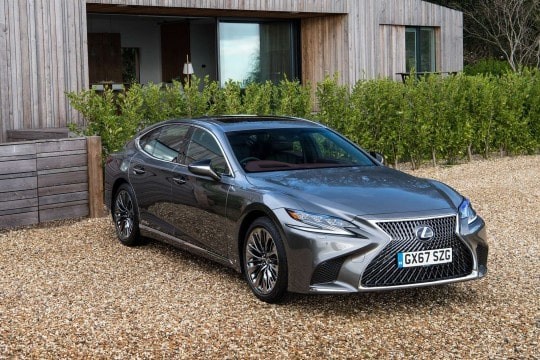
Luxury Car
Premium manufacturers continue to dominate this segment: BMW 7 Series PHEV, Lexus LS, Mercedes S-Class PHEV and Porsche Panamera E-Hybrid are among the options available.
For those fortunate enough to qualify for a luxury car benefit, the average petrol/diesel BiK exceeds £1,100 per month for a 40% taxpayer. The equivalent hybrid options start from approximately £350 per month, bringing the luxury company car option back within reach for many drivers who might otherwise opt for a cash allowance.
Compact & Small SUVs
SUVs remain the dominant body style in personal leasing, and there is strong demand in the company car market too - though high combustion engine BiK rates have previously pushed drivers towards cash alternatives.
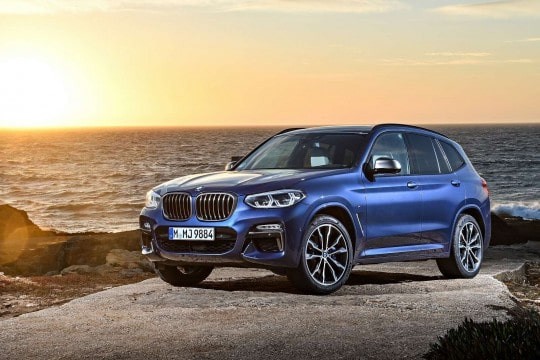
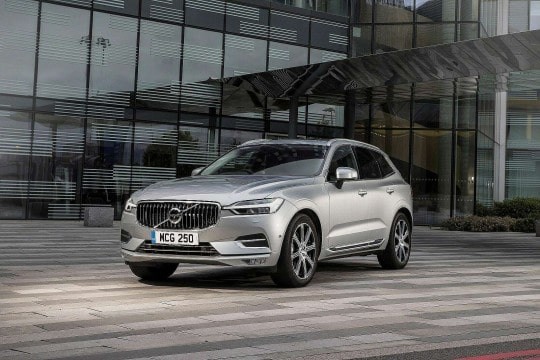
A wide range of hybrid options is now available, including the BMW X3 PHEV, Lexus NX, Volvo XC40 Recharge, Volvo XC60 Recharge, Hyundai Kona Hybrid, Kia Niro PHEV, Lexus UX, MINI Countryman PHEV, Toyota C-HR and DS 7 E-Tense.
With BiK as low as £65 per month for a 40% taxpayer on the most tax efficient options, and business total cost of ownership (TCO) running costs from around 32p per mile, the case for retaining drivers in the company car scheme has rarely been stronger in this segment.
Medium & Large Hybrid SUV
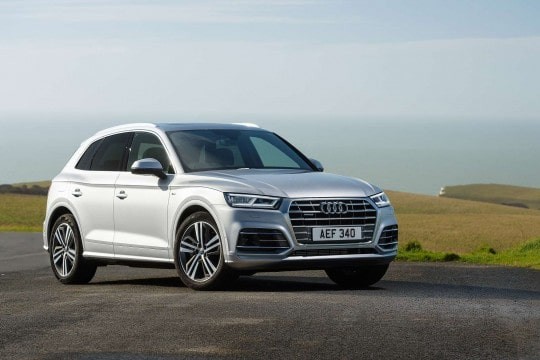
The larger SUV market is equally well served, with options including the Land Rover Range Rover Sport PHEV, Audi Q5 TFSI e, BMW X5 xDrive50e, Hyundai Tucson PHEV, Lexus RX, Peugeot 5008, Porsche Cayenne E-Hybrid, Toyota RAV4 PHEV and Volvo XC90 Recharge.
BiK for a 40% taxpayer starts from around £160 per month in this segment, against a petrol/diesel volume manufacturer average of approximately £375 per month, and a premium manufacturer diesel average in excess of £660 per month. Business TCO running costs start from around 49p per mile for the best hybrid lease deals in this class.
So Will Hybrid Car Leasing Options Reduce Company Car Driver's Benefit in Kind Tax in 2026? The Answer Is Undoubtedly Yes.
The hybrid car leasing option remains a highly tax efficient company car choice for drivers across every segment in 2026. Fleet operators should be aware of the Euro 6e-bis emissions retesting changes arriving from April 2026, which may affect official CO2 figures for some PHEVs - but the fundamental tax advantage over combustion engine alternatives remains substantial and well-evidenced.
Choosing the right vehicle requires careful consideration of vehicle cost, fuel efficiency, emissions free range, the driver's tax position and journey type and frequency.
If you have any questions or would like to find out more about your Hybrid Vehicle Business Leasing Options, call Let's Talk Leasing on 0330 056 3331 to speak with one of our friendly advisors.
Alternatively, you can request a call back, email us or fill in our online contact form and we'll be in touch as soon as possible.